
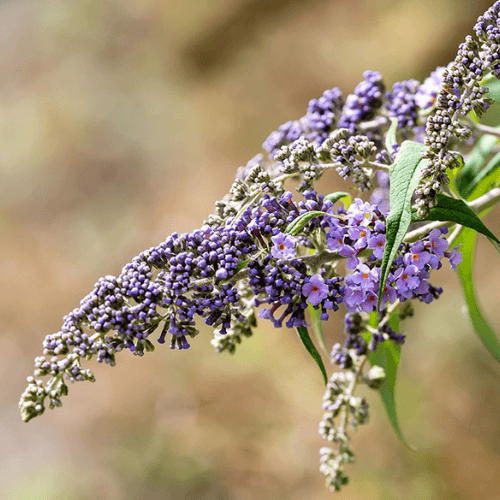
Why Summer Creates Unique Challenges for Commercial Sites
For many commercial sites, vegetation management is often viewed as a cosmetic issue, something to be addressed when budgets allow, or complaints arise.
In reality, overgrown vegetation can quickly develop into a significant operational, safety, and financial risk.
At Frodsham Tree Solutions Ltd, summer represents one of the busiest periods for commercial site clearance and vegetation management works across Cheshire and the North West.
While much of the arboricultural industry focuses heavily on pruning and tree removals during the growing season, industrial estates, business parks, logistics facilities, and public sector sites often face an entirely different challenge: rapidly developing vegetation growth that can affect safety, security, infrastructure, and operational efficiency.
For industrial estate managers, facilities managers, property management companies, and logistics operators, proactive summer vegetation management should form an important part of wider asset protection and risk management strategies.
The combination of longer daylight hours, warmer temperatures, and periods of rainfall can lead to significant vegetation growth between June and September.
Areas that appeared manageable during spring can quickly become overgrown, reducing visibility, restricting access, and creating hidden liabilities across commercial premises.
Common issues we encounter during summer site inspections include:
- Buddleia colonising buildings and retaining walls
- Bramble and scrub encroaching onto access routes
- Self-seeded trees are establishing within drainage systems
- Vegetation obstructing CCTV coverage
- Reduced visibility at site entrances and junctions
- Encroachment onto parking bays and pedestrian walkways
- Overgrowth is restricting access to utilities and infrastructure
The earlier these issues are identified, the simpler and more cost-effective they are to resolve.
Buddleia: The Unexpected Threat to Commercial Infrastructure
One of the most common and underestimated issues we encounter is Buddleia.
Often referred to as the butterfly bush, Buddleia has become one of the UK’s most successful urban colonising species. It thrives in harsh conditions and actively seeks out weaknesses within the built environment.
We regularly find Buddleia establishing itself within:
- Cracked masonry
- Expansion joints
- Retaining walls
- Roof voids
- Gutter systems
- Drainage structures
- Older industrial buildings
- Redundant commercial properties
While Buddleia itself rarely damages sound structures, its root systems exploit existing weaknesses, gradually widening cracks and accelerating deterioration.
Left unmanaged, this can contribute to:
- Displaced brickwork
- Damage to retaining walls
- Blocked gutters and drainage systems
- Roof damage
- Water ingress issues
- Increased maintenance costs
For commercial property owners, early intervention is considerably more cost-effective than structural repairs.
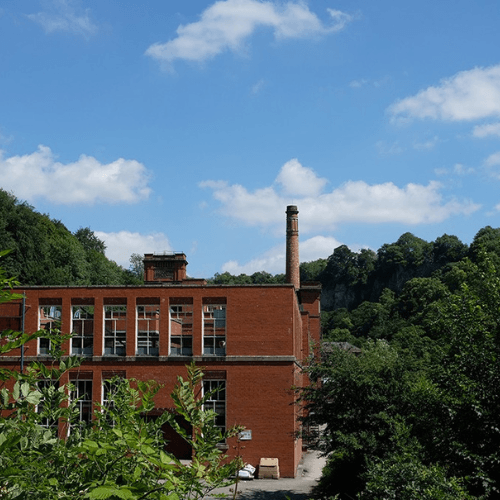
Accessing High-Level Buddleia Safely with MEWP and Operator Hire
One of the challenges with Buddleia on commercial sites is that it rarely establishes itself in convenient locations. It is often found growing from high-level gutters, roof edges, parapets, retaining walls, cladding junctions, old brickwork and other hard-to-reach areas where safe access from the ground is not possible.
In these situations, professional access planning becomes essential.
At Frodsham Tree Solutions Ltd, we provide MEWP and operator hire across the North West and North Wales, allowing difficult vegetation clearance works to be carried out safely and with greater control.
A MEWP, or Mobile Elevated Work Platform, provides a stable working platform where climbing is unsuitable, ladders would be unsafe, or access is restricted around buildings and commercial infrastructure.
This is particularly useful for removing Buddleia and self-seeded vegetation from:
- Roof lines and gutters
- High-level brickwork
- Retaining walls
- Building elevations
- Industrial units and warehouses
- Areas above walkways, service yards or access routes
- Locations close to fragile surfaces or sensitive infrastructure
Using a MEWP allows our team to work with precision, reducing risk to buildings, staff, contractors and the wider site. It also supports safer removal where vegetation has established near roof structures, drainage systems or elevated sections of masonry.
For facilities managers and commercial property owners, this means hard-to-access vegetation can be addressed professionally before it becomes a more costly building maintenance or structural issue.
Frodsham Tree Solutions provides MEWP hire with a qualified operator, rather than unaccompanied equipment hire. This ensures the platform is positioned, operated and managed safely by an experienced professional, supporting safe access around buildings, utilities and confined commercial environments.
Overgrown Vegetation Can Compromise Site Security
Overgrown vegetation is not simply an aesthetic issue.
Shrubs, self-seeded trees, and unmanaged boundary growth can obstruct CCTV cameras, reduce the effectiveness of external lighting, and create concealed areas around commercial premises.
We frequently encounter situations where vegetation has:
- Blocked security camera sightlines
- Restricted access to perimeter fencing
- Reduced visibility around entrances
- Created hidden areas attractive to anti-social behaviour
- Restricted access for maintenance teams
For logistics operators and industrial estates operating around the clock, maintaining clear sightlines forms an important part of wider site security management
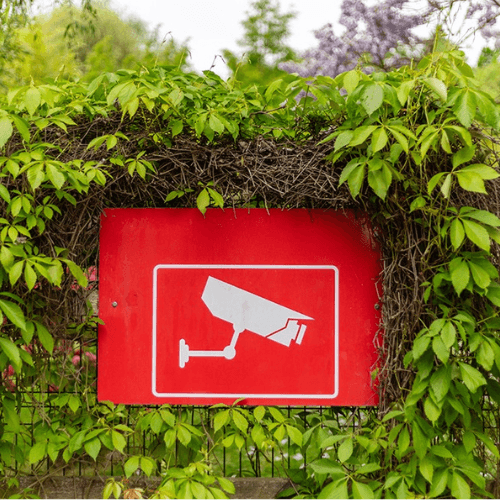
Visibility Splay, Access Roads and Liability
Summer growth can significantly affect visibility across commercial premises.
Overgrown vegetation around site entrances, internal junctions, delivery areas, and access roads can create risks for:
- HGV drivers
- Forklift operators
- Staff vehicles
- Visitors
- Pedestrians
Visibility splays that were compliant in spring can become heavily compromised by late summer growth.
For facilities managers and estate operators, maintaining safe access routes is an important part of meeting wider health and safety obligations and reducing potential liability.
Fire Risk During Dry Weather
Following years of unusually dry summers across the UK, fire risk management is becoming an increasingly important consideration for commercial sites.
Dry vegetation located adjacent to warehouses, storage compounds, fencing, and industrial units can significantly increase fire loading across a site.
Particular areas of concern include:
- Fence line vegetation
- Dry scrub adjacent to buildings
- Bramble growth around utilities
- Fly-tipped materials concealed within overgrowth
- Vacant land awaiting development
Maintaining clear defensible spaces around buildings can assist with both fire prevention and emergency service access if an incident occurs.
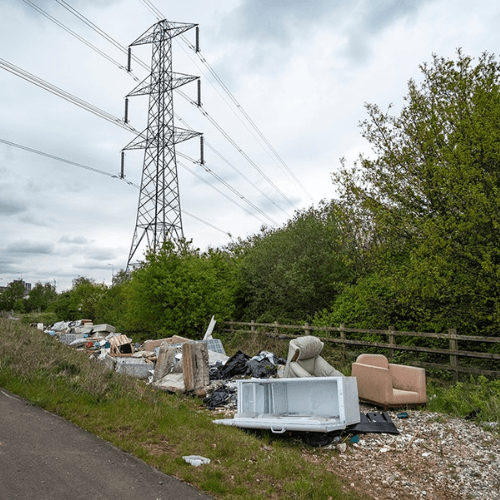
Pests, Vermin and Hidden Maintenance Issues
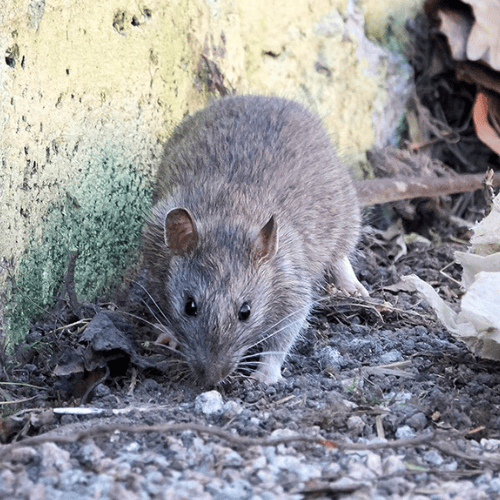
Dense vegetation can provide ideal harbourage for rodents and other pests.
Overgrown areas often conceal:
- Fly tipping
- Drainage issues
- Fence damage
- Illegal access points
- Structural defects
For food manufacturers, logistics businesses, and industrial estates, effective vegetation management can form part of wider pest management and compliance strategies.
Vegetation Can Compromise Site Security
Overgrown vegetation is not simply an aesthetic issue.
Shrubs, self-seeded trees, and unmanaged boundary growth can obstruct CCTV cameras, reduce the effectiveness of external lighting, and create concealed areas around commercial premises that are difficult to monitor.
We frequently encounter situations where vegetation has:
- Blocked security camera sightlines
- Restricted access to perimeter fencing
- Reduced visibility around entrances
- Created hidden areas attractive to anti-social behaviour.
- Restricted access for maintenance teams
Another issue that is often overlooked is the establishment of self-seeded trees along security fencing and perimeter boundaries.
Species such as Sycamore, Willow, Alder and Buddleia frequently establish themselves directly alongside palisade fencing, mesh security fencing and boundary walls.
As these trees mature, they can effectively create a natural climbing aid, providing footholds and handholds that make it considerably easier for individuals to scale security fencing and gain access to restricted areas.
On a number of commercial and industrial sites, we’ve identified self-seeded vegetation that has significantly reduced the effectiveness of the site’s perimeter security simply because it had been allowed to establish unchecked.
For facilities managers, industrial estate operators and property management companies, routine vegetation inspections should therefore be considered part of wider site security management, rather than purely grounds maintenance.
Professional vegetation clearance helps to:
- Maintain clear security corridors around perimeter fencing
- Preserve CCTV sightlines
- Improve external lighting effectiveness
- Reduce opportunities for unauthorised access
- Maintain safe inspection and maintenance access around boundaries
Taking a proactive approach to shrub and tree management helps ensure that perimeter security performs as intended while reducing future maintenance costs.
Professional Shrub Clearance and Vegetation Management
Professional shrub clearance involves far more than simply cutting vegetation back.
Species such as Buddleia, Bramble, self-seeded Sycamore, Alder regeneration, and Willow colonisation can all respond aggressively to inappropriate management techniques.
At Frodsham Tree Solutions Ltd, our approach includes:
- Species identification
- Site-specific risk assessment
- Safe access planning
- Root management strategies
- Long-term vegetation control
- Infrastructure protection
- Future maintenance planning
Our objective is to remove the immediate issue while reducing future maintenance requirements and protecting commercial assets.
Taking a Proactive Approach to Summer Site Management
For commercial property managers, reactive vegetation management often proves significantly more expensive than planned maintenance programmes.
Regular summer inspections allow emerging issues to be identified early, reducing both risk and future costs.
By adopting a proactive approach, site managers can improve:
- Site safety
- Security
- Presentation
- Tenant satisfaction
- Asset protection
- Regulatory compliance
Supporting Commercial Clients Across Cheshire and the North West
Frodsham Tree Solutions supports industrial estates, business parks, logistics facilities, public sector organisations, and commercial landlords across Cheshire and the North West with professional vegetation management, shrub clearance, arboricultural surveys, MEWP and operator hire, and grounds maintenance services.
As a veteran-led business, we bring a disciplined, safety-first approach to every project we undertake. We are also committed to creating meaningful employment opportunities for Armed Forces service leavers and veterans transitioning into civilian careers within arboriculture and vegetation management.
By combining professional arboricultural expertise with measurable social value, we help our clients protect their assets while supporting the communities in which they operate.

Written By Chris Whitby. Company Owner and Lead Arborist