

Our team recently completed a specialist tree management programme involving four mature Oak trees at a beautiful equestrian property in Malpas.
The Oaks were an established and valuable feature of the property, but our tree assessment identified significant deadwood within their crowns. Several dead branches were positioned above the house, roadway and areas regularly used by pedestrians, creating a foreseeable risk should they fail.
Our objective wasn’t to unnecessarily reduce or reshape these impressive trees. It was to identify and remove the deadwood presenting a risk while retaining the healthy structure, character and long-term value of the Oaks.
Using a specialist MEWP, our professional arborists safely accessed the crowns and carried out controlled deadwood removal, leaving the property safer without unnecessary intervention.
Why Older Oak Trees Require Careful Management
Mature and veteran Oaks are some of the most valuable trees within the British landscape. As they age, however, their management requirements change.
Deadwood can be part of an oak’s natural ageing process. Older trees may gradually shed branches, develop cavities, and change their crowns as they respond to environmental conditions and their own increasing size and weight.
Importantly, deadwood doesn’t automatically mean an old Oak is unhealthy or should be removed.
In the right location, standing and fallen deadwood can provide extremely valuable habitat for fungi, insects, birds and other wildlife. The decision to remove it therefore needs to consider both the tree’s condition and what is beneath it.
Where large dead branches are positioned above a home, road, driveway, parking area, footpath or frequently occupied space, the consequences of branch failure can be very different.
This is where professional arboricultural assessment becomes particularly important.
Managing Deadwood Without Unnecessarily Pruning Mature Oaks
Our approach to established Oaks is always proportionate.
Heavy or unnecessary pruning can stress a mature tree and remove healthy canopy it relies on. It can also remove habitat features that may have taken many decades to develop.
Rather than approaching the four Oaks with the intention of extensively reducing their crowns, we focused specifically on the deadwood presenting a potential hazard.
The work involved assessing the position, size, and condition of dead branches, along with the areas beneath the trees. This let us focus intervention where it was justified while retaining as much of the trees’ natural structure as possible.
For property owners with mature Oaks, this distinction is important: good tree management isn’t about making an old tree look tidy. It’s about understanding its condition, recognising foreseeable risks and carrying out the right level of intervention for that particular tree and location.
Protecting People, Horses, Property and Vehicles
The setting made careful management particularly important.
These weren’t isolated trees standing in an unused field. Their crowns extended over areas associated with the house, roadway and pedestrian movement within an active equestrian property.
A falling branch in these locations could potentially affect residents, visitors, vehicles, buildings, or people moving around the site.
Managing the Oaks therefore required us to consider not only tree condition, but also how the surrounding property was being used.
This site-specific approach is an important part of professional tree risk management. The same dead branch may represent a very different level of risk depending on whether it is positioned above an occupied area or within a part of the property that is rarely accessed.
Using a Specialist MEWP and Operator for Controlled Deadwood Removal
Access was another important consideration.
Given the maturity and size of the Oaks, we used a specialist Mobile Elevated Work Platform (MEWP) to safely access the crowns and reach the required sections of deadwood.
The MEWP gave our arborists a stable working position at height and let the team approach individual branches in a controlled manner.
This was particularly valuable around the house and roadway, where control was essential to protect the property and surrounding areas.
Using the correct access equipment also meant we could target the required deadwood precisely rather than carrying out more extensive pruning to facilitate access.
For mature-tree management, choosing the correct equipment is often as important as deciding what work needs to be undertaken in the first place.

Repurposing Woodchip and Timber on the Property
Responsible arboriculture also means considering what happens to the material once the work is complete.
Rather than unnecessarily removing usable material from the site, we processed all brash generated during the works through our woodchipper.
The client retained the resulting woodchip and repurposed it around the equestrian property.
We cut larger sections of oak into manageable logs, allowing the homeowner to season the timber before using it as firewood during the winter.
This meant the material generated through essential safety works could remain useful rather than being treated simply as waste.
Supporting Environmental, Social and Governance Objectives
Although this was a relatively focused programme of arboricultural work, it demonstrates how responsible tree management can support wider Environmental, Social and Governance (ESG) objectives.
The project enabled us to:
- Preserve four valuable mature Oak trees through proportionate management
- Reduce foreseeable risks to residents, visitors, property and vehicles
- Use specialist equipment to complete work safely and efficiently
- Minimise unnecessary intervention within established tree crowns
- Process and retain woodchip for reuse around the property
- Repurpose larger timber as a sustainable source of winter fuel
- Reduce the amount of material requiring transportation away from site
For us, sustainability isn’t simply about planting new trees. Retaining and responsibly managing the mature trees already present within a landscape can be equally important.
Why Regular Assessment of Mature Oaks Matters
One challenge with mature trees is that their condition isn’t static.
Branches die, cavities develop, environmental conditions change and surrounding land use can alter over time. An area that once had very little pedestrian activity may later become a driveway, parking area, paddock entrance or frequently used route.
Periodic professional assessment helps property owners understand these changes and determine whether intervention is necessary.
For mature Oaks in particular, the objective should rarely be intervention for intervention’s sake. Where a tree can be safely retained, appropriate management can allow it to continue contributing to the landscape, biodiversity and character of a property for many years to come.
Where deadwood, structural defects or other concerns are identified, early professional advice also provides an opportunity to manage the issue before it develops into a more significant risk or requires more extensive work.

Responsible Management for Valuable Mature Trees
The four Oaks at this equestrian property remain an important feature of the landscape.
By selectively removing hazardous deadwood rather than unnecessarily reducing or removing the trees, we improved safety while preserving their character and environmental value.
At Frodsham Tree Solutions Ltd, responsible arboriculture means understanding the tree, understanding the site, and recommending work proportionate to the actual risk.
Whether we’re managing mature Oaks on private estates, equestrian properties, commercial sites or public land, our approach is always based on professional assessment, careful planning and the long-term interests of the tree and those around it.
As a veteran-led business, we bring the same disciplined, safety-focused approach to every project, combining experienced arborists, appropriate specialist equipment and careful site management to leave each property safer, more sustainable and better managed for the future.
Based in the North West of England, we are ideally situated to conduct tree services in Cheshire, The Wirral, Merseyside, Greater Manchester, North Wales and Lancashire.
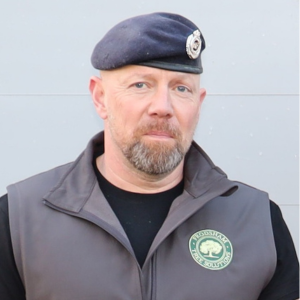
Written By Chris Whitby. Company Owner and Lead Arborist